


WASCON is the reference international conference on the issue of integration of secondary raw materials in the field of civil engineering.
In 1991, a group of scientists from Northern Europe (mainly from The Netherlands, Denmark, Finland, Sweden), but also North America (Canada and USA) and France founded ISCOWA (International Scientific Society for Construction with Waste) and launched the first WASCON conference, which became and remains the main activity of ISCOWA.
This initiative was in fact the beginning of an important movement around the recovery of waste. Indeed, the same year was created the TC292 which has since then standardized all the leaching tests and procedures integrated to-date within the European landfilling and recovery regulations and more generally in all the assessment procedures of the behaviour of materials in Civil Engineering scenarios. These same tests are also being used as the basis for standardisation regarding emissions of hazardous substances from construction products (TC351). The latter is a measure of the importance of the movement initiated in 1991.
During the first editions of WASCON (every 3 years), i.e. 1991, 1994, 1997, 2000, 2003, 2006, contributions from France and other Southern European countries (Spain, Italy, Portugal, Greece) have increased. The period 1995-2000 was the most productive considering that during this period, French scientists and industrialists were very active in the field of waste stabilization, with two international conferences organized for this topic : Nancy95 and Stab&Env Lyon 99.
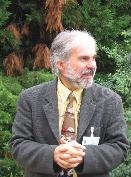
Following the 2006 edition of WASCON in Belgrade, I had the honour of being selected by the board of ISCOWA as the new chairman, with the objective of providing WASCON a new outlook in the difficult international context of natural resource depletion and increase of sanitary and environmental requirements for construction products. The social and economical aspects of recycling will complete the overview of the sustainable management of alternative materials in construction.
Given the importance of research and development underway at this time in the field of recovery of alternative materials in civil engineering and the significant involvement of industry, producers, eco-industries or operators of civil engineering, it seemed a good opportunity to highlight, at a European and international level, the role of the research and development teams, and so I accepted this mission on behalf of EEDEMS (French research network on waste and polluted materials management).
We count on a strong mobilization of both the scientific and industrial communities...
Why WASCON 2009 in LYON: University of Lyon is the most important research and teaching centre in France in the field of Environment. Moreover, waste recycling is the main topic of research of laboratories of this University for more than 35 years. Most of the assessment procedures in the waste management field have been developed in this University. In the framework of EEDEMS (French research network on waste and polluted materials management) five of the main French research public bodies in this field (INSA Lyon-CSTB-ENTPE-BRGM-ENSMSE) work together in a research network and on a technological platform allowing experimentations on waste recycling in civil engineering in pilot scale scenarios in close collaboration with industry.
Lyon is also a wonderful cultural and historical place…. Known to be also one of the best gastronomic destinations in the world !
Sincerely,
Jacques Méhu
Organising a major international conference requires a considerable amount of work for those involved and we would like to express our thanks to the following persons and organisations:
Members of the Scientific and Organising Committees, who are members of:






On behalf of the Organising Committee,
Prof. Jacques Méhu